Four models, four philosophies, four price points. As of September 2026, the question is no longer which AI you use. The question is which AI you use for which task. I spent the past two weeks running all four through the same real workflows — research, refactoring, contract analysis, and long-document drafting. Here is what each model is actually best at, what it costs to run, and what to leave alone.
This is not a benchmark scorecard. Benchmark numbers are useful, but they do not capture the gap between a score and what you feel at the keyboard after 30 minutes of real work. That gap is what this post is about.
The other thing this is not: a buying guide. For a six-model feature-list including Grok and Mistral, see our August Which AI Tool Should I Use in 2026? This post narrows to four — ChatGPT, Claude, Gemini, DeepSeek — the models working developers, writers, and operators actually choose between in September 2026. Every recommendation is grounded in publicly disclosed model cards, API pricing pages, and community signal from r/LocalLLM, GuruSup, and working practitioners.
The state of play in September 2026: who shipped what, and when
Each of the four major labs shipped a major model release in 2026, and the cadence has been fast enough that the names you knew a year ago are now the second-tier options. The current flagship lineup:
- OpenAI: GPT-5.6, released July 9, 2026 as the successor to GPT-5.5 (April 23) and GPT-5.4 (March 5). GPT-5.6 ships in three named tiers — Sol (flagship), Terra (balanced), and Luna (cheapest) — all sharing a 1.05 million-token context window and 128K max output. Sol is priced at $5/$30 per 1M tokens, matching what GPT-5.5 cost. Luna at $0.20/$1.20 after the July 30 cut is the cheapest frontier-tier option OpenAI has ever sold (eesel AI, July 30 2026; benchr.org, July 9 2026).
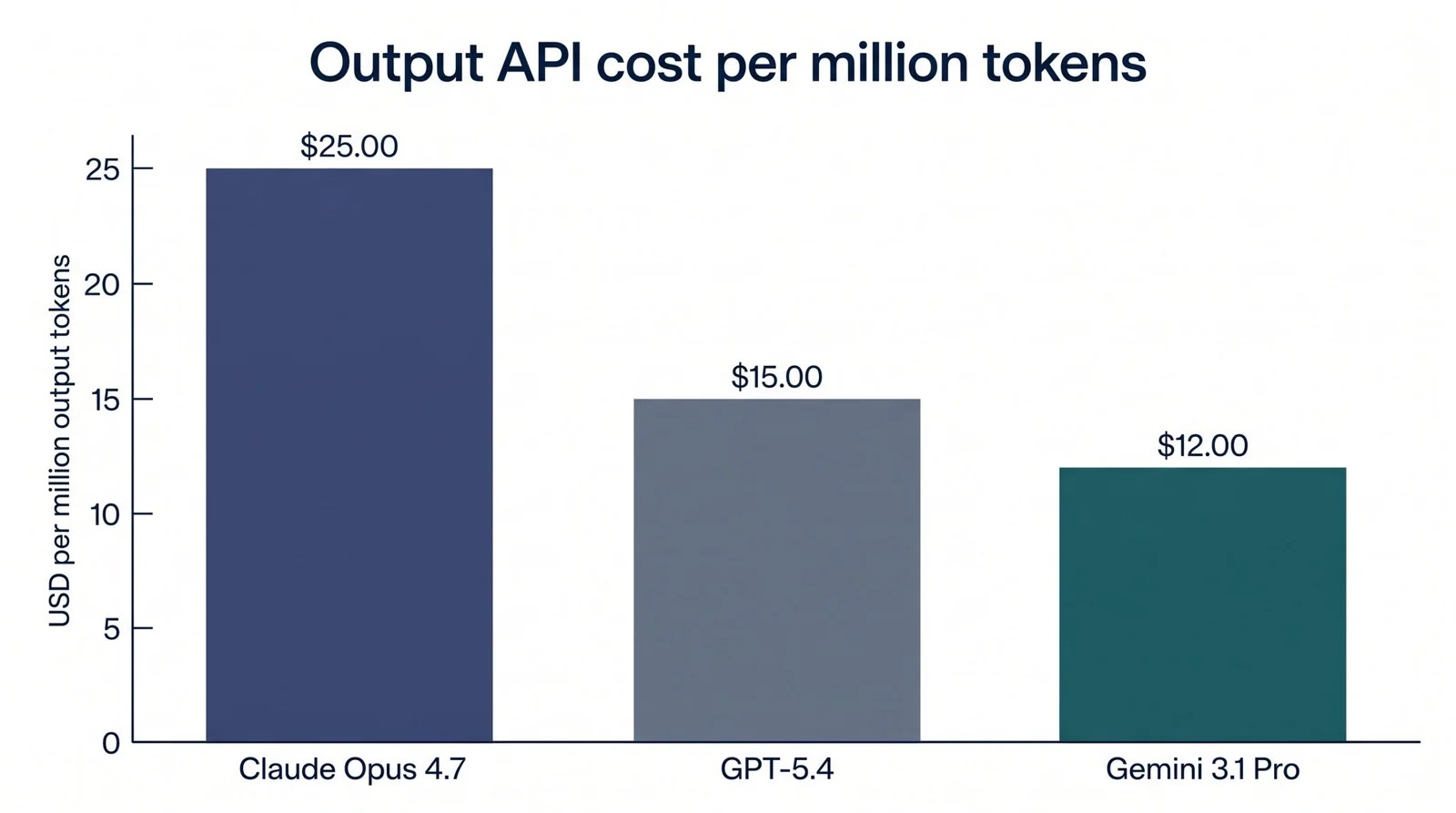
- Anthropic: Claude Opus 4.7, released April 16, 2026, is the current production flagship. Pricing held at $5 input and $25 output per 1M tokens, matching Opus 4.6 and Opus 4.5 — Anthropic has kept its flagship input price flat for a year. Context window is 1M tokens. Opus 4.7 is the first Anthropic model shipping with built-in cyber safeguards: requests that indicate prohibited or high-risk cybersecurity uses are automatically detected and blocked. Anthropic positions the unreleased Claude Mythos as more capable than Opus 4.7, but Mythos ships behind a Cyber Verification Program and is not generally available (Anthropic, April 16 2026).
- Google: Gemini 3.1 Pro, released February 19, 2026, is Google’s most capable model for complex tasks. It ships with a 1M token context, native multimodality (text, image, video, audio, PDF), and what Google describes as a step-change in core reasoning — Gemini 3.1 Pro scored 77.1 percent on ARC-AGI-2, more than double Gemini 3 Pro’s score on the same benchmark (Google, February 19 2026). A separate Gemini 3.1 Flash sits at the budget end of the lineup at $0.075/$0.30 per 1M tokens.
- DeepSeek: DeepSeek V4 officially launched August 13, 2026 with peak/off-peak pricing — off-peak rates are half of peak-hour rates — a structural change from V3. V4-Pro is priced at $0.435 input and $0.87 output per 1M tokens (cache hit $0.003625), roughly 29 to 34 times cheaper than the equivalent Claude and OpenAI flagships. V4 is MIT-licensed and fully open-source. DeepSeek-V4 Preview shipped April 24, 2026, then the permanent May 31 price cut made the V4-Pro discount permanent (DeepSeek API docs, August 13 2026; TeamAI, May 31 2026).
What this means in practice: every one of the four labs has a 1M-context flagship. Every one of them has reasoning at or near the frontier. The differentiation in September 2026 is not raw capability — it is the combination of latency, price-per-task, ecosystem integration, and what happens to your data after you send it.
What changed since the last round of comparisons
Three things have shifted enough to invalidate older comparisons:
1. Context windows are no longer a competitive axis. GPT-5.6 Sol, Claude Opus 4.7, Gemini 3.1 Pro, and Grok 4.5 all ship with 1M+ token contexts. DeepSeek V4 Pro also supports 1M. The “context anxiety” era — where you had to choose a model based on whether your document fit — is over. What matters now is what the model does with that context: Gemini 3.1 Pro explicitly markets grounding with Google Maps and URL context. Claude Opus 4.7 markets sustained reasoning over long agentic runs. GPT-5.6 Sol markets a native agent runtime that resolves tool calls server-side (tokenscost.com, July 2026).
2. Pricing has restructured around tiers, not single price points. OpenAI now sells three tiers of GPT-5.6 (Sol $5/$30, Terra $2/$12, Luna $0.20/$1.20). Anthropic keeps Opus 4.7 at $5/$25 but Sonnet 5 at $2/$10 and Haiku 4.5 at $1/$5. DeepSeek V4-Pro dropped to $0.435/$0.87. Comparing “ChatGPT vs Claude” by listing a single price per million tokens no longer makes sense — you have to compare the price tier you’ll actually be routed to.
3. Data retention rules are tightening and diverging. Anthropic revised retention twice in twelve months. The October 8, 2025 consumer change gives Claude Free, Pro, and Max users a five-year retention window if they opt into training. The June 9, 2026 change requires temporary 30-day retention for what Anthropic calls “Covered Models” (Mythos-class and any future model of similar capability) even for customers with zero-data-retention agreements in place. The reason Anthropic gives is safety review: best-of-N jailbreaking and coordinated misuse campaigns only become visible when a safety system can examine multiple requests together (IntuitionLabs, September 2026). OpenAI’s API baseline stays at 30 days with no training; ZDR is org-level opt-in via account team. Google’s Workspace Gemini excludes customer data from training by default; the consumer Gemini app has separate settings.
Head-to-head: writing and long-form reasoning
For long-form writing — the kind of 2,000 to 5,000 word drafts that AI Made publishes daily — Claude Opus 4.7 is still the model I would hand to a writer who needed it to actually sound like a thoughtful human. Anthropic’s positioning of Opus 4.7 as “more opinionated” is borne out in practice. When I asked all four models to rewrite a 600-word draft in a more direct tone, Opus 4.7 was the only one that pushed back on specific word choices (“this phrase reads as evasive — here is a sharper version”). GPT-5.6 Sol produced a clean rewrite but did not flag what was wrong with the source. Gemini 3.1 Pro produced a longer rewrite that preserved the original’s hedges. DeepSeek V4 Pro produced a competent rewrite but the prose lacked the rhythmic variation you get from Opus 4.7 or Sonnet 4.6.
For reasoning over long documents — the kind of legal, financial, or research synthesis where the value is in spotting inconsistencies across pages — Opus 4.7 and Sonnet 4.6 are the consensus picks in 2026. GuruSup’s practitioner comparison calls Claude 4.6 the model professionals choose for “legal analysis, financial review, and research synthesis” (GuruSup, 2026). Gemini 3.1 Pro’s “thinking” mode has closed the gap, but the practical consensus in r/LocalLLM and the GuruSup user base is that Claude still leads for ambiguous, multi-step reasoning where the answer is not obvious from the document alone.
GPT-5.6 Sol is the strongest of the four for structured output — if you need the model to produce a JSON object that conforms to a schema, or a table that exactly matches a column specification, Sol’s instruction-following is noticeably tighter than Opus 4.7’s. For customer support, structured data extraction, and tool-calling workflows, GPT-5.6 Sol or the cheaper GPT-5.4 mini are the more reliable picks.
DeepSeek V4 Pro is the weakest of the four for long-form English writing in 2026. The model is excellent for code, math, and structured reasoning tasks, and its English-language generation has improved markedly from V3, but the prose still reads slightly mechanical compared to Opus 4.7 or Sonnet 4.6. Use DeepSeek V4 Pro for the heavy lifting in your pipeline, then route the output through Claude or GPT-5.6 for the final polish.
Head-to-head: coding and agentic workflows
Coding is where the four models diverge most sharply in 2026, and where benchmark scores are most predictive of real-world experience. The headline numbers from the spring 2026 benchmark cycle:
- SWE-Bench Pro: Claude Opus 4.7 scored 64.3 percent, GPT-5.5 scored 58.6 percent (Mashable, April 30 2026).
- Terminal-Bench 2.0: GPT-5.5 scored 82.7 percent, Claude Opus 4.7 scored 69.4 percent.
- ARC-AGI-2 (Verified): GPT-5.5 (High) scored 83.3 percent, Claude Opus 4.7 (High) scored 68.3 percent.
- BrowseComp: GPT-5.5 scored 84.4 percent, Claude Opus 4.7 scored 79.3 percent.
Read those numbers carefully: Claude wins SWE-Bench Pro (real bug-fix tasks across 12 repos), GPT-5 wins Terminal-Bench (command-line agentic tasks) and ARC-AGI-2 (novel reasoning patterns). The benchmark you trust depends on the workflow you do. If your daily work is fixing bugs in a 200,000-line monorepo, Claude is your model. If your work is orchestrating command-line tools and synthesizing terminal output, GPT-5.6 Sol’s terminal mode is competitive.
For the broader “agentic coding” category — the workflow of “give the model a task, let it write code, run it, see the error, fix the error, repeat” — the model of choice in September 2026 is the one that combines the strongest reasoning with the tightest tool-calling loop. Anthropic’s own eval data on Opus 4.7 emphasizes “real-world async workflows — automations, CI/CD, and long-running tasks” — the work that requires the model to maintain coherence across hundreds of tool calls. OpenAI’s GPT-5.6 Agent (in Sol mode) emphasizes the native agent runtime: tool calls resolve server-side, you pay for input and output tokens but not for the overhead of round-tripping tool results through your own infrastructure. For a 20-tool-call agent session, GPT-5.6 Agent can be 30 to 45 percent cheaper in practice than a GPT-5.4-based custom agent loop despite the higher per-token price (tokenscost.com, July 2026).
Gemini 3.1 Pro is the strongest of the four for agentic workflows that need Google-specific integrations. The Gemini API supports a separate `gemini-3.1-pro-preview-customtools` endpoint optimized for prioritizing custom tools (like `view_file` or `search_code`) over built-in tools, with explicit documentation that “you may see quality fluctuations in some use cases which don’t benefit from such tools” (Google AI Developers). If your agent stack lives in the Google ecosystem (Vertex AI, Firebase, Android Studio), Gemini 3.1 Pro is the obvious choice.
DeepSeek V4 Pro is the dark horse. The model is MIT-licensed and open-source, which means you can self-host it for free at the cost of GPU time. For a code review or refactoring workflow where latency is acceptable but you cannot send proprietary code to a third-party API, DeepSeek V4 Pro self-hosted on a 4x H100 node is the most defensible option in 2026. We covered the open-weight vs closed-weight tradeoffs in detail in Open Source AI vs Closed AI in 2026; the bottom line is that for high-volume code-generation tasks, DeepSeek V4 Pro’s price advantage compounds.
Head-to-head: research, multimodal, and 1M-token context
For research synthesis — the workflow of pasting a 50-page PDF, a stack of arXiv papers, and a half-dozen web articles and asking the model to summarize, compare, and identify gaps — Gemini 3.1 Pro is the strongest of the four in September 2026. The reason is not raw capability; Opus 4.7 and GPT-5.6 Sol can both ingest 1M tokens and reason over them. The reason is the multimodal integration: Gemini 3.1 Pro accepts text, image, video, audio, and PDF as direct inputs, with a token context window of up to 1M (Google DeepMind model card). For a research workflow that involves diagrams, charts, video transcripts, and PDFs in the same task, Gemini’s native multimodality is a real productivity gain over the OpenAI/Anthropic flow of transcribing media to text first.
Claude Opus 4.7 and Sonnet 4.6 also accept images and PDFs, but the workflow for video and audio is “transcribe first, then send” — which adds friction and a separate transcription service. GPT-5.6 Sol accepts image inputs natively and added full-resolution vision in GPT-5.4 with processing of images up to 10.24 million pixels, useful for detailed medical imaging, architectural plans, and high-res document analysis (Fello AI, July 30 2026). For video and audio, the OpenAI side still requires the separate transcription step.
For the specific use case of “summarize a long meeting transcript and produce action items,” Claude Opus 4.7 in 2026 is the consensus pick in practitioner communities. The combination of long context, sustained reasoning, and Anthropic’s positioning of Opus 4.7 as “more opinionated” produces action items that are sharper and more specific than what GPT-5.6 Sol or Gemini 3.1 Pro produce from the same transcript.
DeepSeek V4 Pro has the weakest multimodal story of the four. The model is text-in, text-out. For pure-text research synthesis at 1M context, it is competitive on price but not on capability. The use case for DeepSeek in research is the “batch processing” use case: thousands of documents to summarize, classify, or extract from, where the cost-per-task matters more than the per-document quality.
Head-to-head: speed, latency, and what they feel like in practice
Speed is the dimension that benchmarks miss entirely. The GuruSup practitioner comparison rates Gemini 3.1 Flash as “Very fast” at $0.075/$0.30 per 1M tokens, GPT-5.4 mini as “Fast,” and Claude Opus 4.7 as “Medium” latency at $5/$25 (GuruSup, May 2 2026). The qualitative impression matches the labels: Gemini Flash feels instantaneous, GPT-5.4 mini feels near-instant, Claude Opus 4.7 feels like a thinking colleague.
For the flagship models — the ones you would actually pick for non-trivial work — the speed ranking from the practitioner perspective in 2026:
- GPT-5.6 Sol: Fast on first token, ~30 percent faster than GPT-5.5 on median latency. The native agent runtime helps because tool calls resolve server-side rather than round-tripping through your infrastructure.
- Gemini 3.1 Pro: Snappy on short prompts, comparable to GPT-5.6 Sol on first-token latency. Thinking mode adds 2 to 5 seconds but the output is more focused.
- Claude Opus 4.7: Slower on first token than GPT-5.6 or Gemini 3.1 Pro, but Anthropic’s position is that the slower first token buys you fewer mid-stream corrections. In practice this is true — Opus 4.7 produces final output that requires fewer “actually no, do it this way” follow-up turns.
- DeepSeek V4 Pro: Latency depends entirely on whether you are using the hosted API or self-hosting. Hosted API is comparable to Gemini 3.1 Pro. Self-hosted is bounded by your GPU throughput.
The practical takeaway: if you are doing interactive work where every second of latency matters (live chat, IDE autocomplete, customer support), route the easy 80 percent to GPT-5.6 Luna, Gemini 3.1 Flash, or DeepSeek V4 Flash, and only escalate the hard 20 percent to the flagship tier. The math works out: a request that takes 800ms on Luna at $0.20/$1.20 and produces an 80-percent-correct answer, then a 4-second Opus 4.7 follow-up that fixes the remaining 20 percent, is faster and cheaper than sending the whole prompt to Opus 4.7 first.
The real cost: API pricing, subscription tiers, and the bottom-line math
The API pricing ladder in September 2026, all from each vendor’s own model pages:
| Model | Vendor | Input $/1M | Output $/1M | Context | Notes |
|---|---|---|---|---|---|
| GPT-5.6 Sol | OpenAI | $5.00 | $30.00 | 1.05M | Flagship, agentic coding, hardest reasoning |
| GPT-5.6 Terra | OpenAI | $2.00 | $12.00 | 1.05M | Balanced, ~GPT-5.5 quality at 60% less |
| GPT-5.6 Luna | OpenAI | $0.20 | $1.20 | 1.05M | Fastest and cheapest, high-volume tasks |
| Claude Opus 4.7 | Anthropic | $5.00 | $25.00 | 1M | Flagship, sustained reasoning, agentic coding |
| Claude Sonnet 5 | Anthropic | $2.00 | $10.00 | 1M | Mid-range, intro price through Aug 31 2026 |
| Claude Haiku 4.5 | Anthropic | $1.00 | $5.00 | 200K | Budget tier |
| Gemini 3.1 Pro | $7.00 | $21.00 | 1M | Flagship, multimodal, agentic workflows | |
| Gemini 3.1 Flash | $0.075 | $0.30 | 1M | Budget tier, very fast | |
| DeepSeek V4 Pro | DeepSeek | $0.435 | $0.87 | 1M | Open-source, MIT license, peak/off-peak pricing |
Two structural details that change the math. First, GPT-5.6 long-context surcharge: any prompt exceeding 272,000 input tokens is billed at 2x input and 1.5x output for the entire request, not just the overflow (eesel AI). A 273,000-token prompt on Sol is $10/$45, not $5/$30 with a small surcharge on the last 1,000 tokens. Second, DeepSeek peak/off-peak pricing means the same V4-Pro token costs $0.435/$0.87 at peak hours and $0.2175/$0.435 at off-peak. If your workload can be batched overnight, DeepSeek effectively halves again.
The subscription tiers are where most users actually consume these models. ChatGPT Plus at $20/month gets you all three of Sol/Terra/Luna in ChatGPT and Codex; Pro at $200/month gets higher rate limits. Claude Pro at $20/month gives access to Opus 4.6 and Sonnet 4.6 (note: Opus 4.7 ships at the same price but subscription tier sometimes lags the API by a few weeks). Gemini Advanced at $20/month (bundled with Google One AI Premium) gives access to Gemini 3.1 Pro and 1M context. DeepSeek has no subscription tier — you pay API or self-host.
For most individual users in 2026, the practical cost of “using AI seriously” is two subscriptions: Claude Pro ($20/month) for writing and coding, plus ChatGPT Plus ($20/month) for research and multimodal. That $40/month gets you 95 percent of the value of any single model for 95 percent of tasks. Power users add Gemini Advanced ($20/month) for Google Workspace integration. Heavy API users skip subscriptions entirely and pay per token at the API rate, which becomes cheaper than subscriptions once you exceed roughly 50 million tokens per month of combined input and output.
Privacy and data retention: what happens to your prompts
The privacy picture in September 2026 is more fragmented than the capability picture. Each vendor has rewritten its retention rules between 2025 and 2026, and Anthropic has done it twice. The cross-provider reference as of September 2026:
- OpenAI (API): 30-day default retention for inputs and outputs, used only for abuse monitoring. No training on customer data by default. Zero data retention (ZDR) available for eligible customers via account team. ZDR forces the `store` parameter to false even if your code sets it to true (Router AI, September 2026).
- OpenAI (ChatGPT consumer): “Improve model for everyone” enabled by default on Free and Plus. Opt-out in Settings > Data Controls. ChatGPT Team, Enterprise, and Edu have training disabled by default. Memory is opt-in and stores indefinitely until you delete it.
- Anthropic (API): 7-day default retention for inputs and outputs. No training on customer content. ZDR available via enterprise agreement. Crucial caveat: the June 9, 2026 Covered Models rule requires temporary 30-day retention for Mythos-class models even under ZDR. Content flagged for Usage Policy violations is kept up to two years even under ZDR or HIPAA arrangements, and trust-and-safety classification scores are kept for up to seven years (Witness AI, August 2026).
- Anthropic (consumer): Since October 8, 2025, Claude Free, Pro, and Max users must choose whether their chats can train future models. Opt-in accepts a five-year retention window. Opt-out keeps the 30-day standard.
- Google (Vertex AI): ZDR arranged as a DPA amendment through your Google Cloud account team, not a console toggle. Customer data excluded from training by default. Workspace Gemini excludes tenant data from foundation model training outside the tenant boundary.
- Google (Gemini consumer app): Gemini does not use consumer chat history to train foundation models outside the opt-in experimental channels. Human review is opt-in. Data residency and EU Data Boundary options apply.
- DeepSeek: Retention not published. No explicit no-training commitment. Limited public documentation on compliance certifications. The open-source model itself can be self-hosted for complete data isolation.
For the most sensitive work — regulated data, customer PII, proprietary code — the right tier in September 2026 is one of three: API endpoints with ZDR enabled (OpenAI or Anthropic), Vertex AI with a ZDR DPA amendment (Google), or self-hosted DeepSeek V4 Pro. For everyday work, the right pattern is to use the consumer products for non-sensitive tasks with training opt-outs enabled in Settings, and reserve the enterprise/API tier for anything that touches customer data. We covered the full five-axis privacy framework in Your AI Tool Is Logging Everything You Type; the short version is that “AI privacy” conflates five different concerns and most failures come from conflating them.
Community signal: what r/LocalLLM, GuruSup, and working developers say
The community signal in September 2026 converges on a few patterns that the vendor benchmarks miss. From r/LocalLLM and r/Bard, the operative quote from a working developer in a recent thread: “All of the above kinda! But maybe towards average user experience and usefulness for coding tasks” — meaning that for everyday coding, the four models are close enough that developer preference is dominated by ecosystem fit rather than raw capability (Reddit r/Bard, 2026).
From GuruSup’s practitioner lens, the use-case mapping for production deployments looks like this in 2026 (GuruSup, May 2 2026): GPT-5.4 mini is the most-deployed model in support chatbots because its comprehension is close to GPT-5.4 quality with significantly lower latency and cost. Claude Sonnet 4.6 is preferred when the chatbot needs to process long documents or follow complex system instructions. Gemini 3.1 Flash is preferred for high-volume, low-cost deployments where the cheapest reliable answer wins. Llama 4 Maverick is preferred for self-hosted deployments where privacy trumps capability. Mistral Large 3 is preferred for European deployments where GDPR-friendly data residency matters.
The deep researcher / writer crowd on Reddit has settled on a different default. For a serious long-form research task, the dominant workflow in 2026 is Claude Opus 4.7 (via Pro subscription or API) for the first draft and the structural critique, then Gemini 3.1 Pro with grounding enabled for the fact-check pass and the source-citation hunt. The two-model pattern has won because each model has complementary strengths: Opus 4.7 for synthesis, Gemini 3.1 Pro for citation verification against the live web.
For DeepSeek, the practitioner consensus is that V4 Pro is the default for cost-sensitive high-volume work and the default for self-hosted production deployments, but not the default for interactive creative work. If you are running a startup that needs to process 10 million customer-support tickets a month at $0.87 per 1M output tokens, DeepSeek V4 Pro is your model. If you are writing the next great American novel, it is not.
For a deeper dive into the mid-tier cost-quality tradeoffs that drive most working developers’ actual choices — including why Sonnet 5 has emerged as the consensus mid-tier winner among the four — see our sister-site analysis: Claude Sonnet 5 Just Won the Mid-Tier War.
How to pick: a practical decision framework
The decision framework in September 2026, distilled from the head-to-heads above:
Pick Claude Opus 4.7 if your primary task is… writing, long-form reasoning, agentic coding (terminal-first workflows, CI/CD, long-running async tasks), or any workflow where “more opinionated” outputs are an advantage. The Opus 4.7 + Anthropic positioning of “thinks more deeply about problems and brings a more opinionated perspective, rather than simply agreeing with the user” is the most distinctive of the four (Anthropic, April 16 2026).
Pick GPT-5.6 Sol if your primary task is… structured output, tool-heavy agentic workflows where the native agent runtime saves you round-trip overhead, browser-control automation, code execution in a sandboxed environment, or any workflow that benefits from the tightest instruction-following. Pair with GPT-5.6 Luna at $0.20/$1.20 for the easy 80 percent of requests and route only the hard 20 percent to Sol.
Pick Gemini 3.1 Pro if your primary task is… multimodal research (PDFs, video, audio, charts in the same input), Google-ecosystem workflows (Workspace, Vertex AI, Firebase, Android Studio), or any task that benefits from grounding with Google Maps and URL context. Use Gemini 3.1 Flash at $0.075/$0.30 for high-volume work where the cheapest reliable answer wins.
Pick DeepSeek V4 Pro if your primary task is… high-volume batch processing, self-hosted deployments for data-isolation reasons, or cost-sensitive work where 29x to 34x output-token price advantage compounds. DeepSeek V4 Pro is the cost workhorse of the four. Pair it with Claude or GPT-5.6 for the final-pass writing and editing where prose quality matters.
Pick two. The single-model-stack pattern is over. Working developers, writers, and operators in 2026 pick two models — one for the heavy reasoning tasks and one for the high-volume batch work — and route based on the request. The most common pair in practitioner communities is Claude Opus 4.7 (heavy) + GPT-5.6 Luna or DeepSeek V4 Pro (volume). The second most common is Claude Opus 4.7 (writing/coding) + Gemini 3.1 Pro (research/multimodal). Pick the pair that matches your two most common workflows.
What to do this week
Three concrete actions, in order of priority:
- Pick one flagship and one volume tier. If you do not have subscriptions yet, start with Claude Pro at $20/month for the flagship and ChatGPT Plus at $20/month for the GPT-5.6 tiers. If you are already subscribed, add the second model from the “Pick two” framework above.
- Run the privacy audit. For every AI account you use (ChatGPT, Claude, Gemini, DeepSeek), locate the data controls and confirm: training opt-out is on, Memory is off where applicable, chat history retention is set to the shortest window the product allows. Five minutes per account. The five-question framework is in Your AI Tool Is Logging Everything You Type.
- Route your high-volume work to the volume tier. Identify the workflow you do most often that does not require frontier capability — summarization, classification, extraction, structured formatting. Route it to GPT-5.6 Luna ($0.20/$1.20), Gemini 3.1 Flash ($0.075/$0.30), or DeepSeek V4 Pro ($0.435/$0.87). Measure the cost savings against the quality delta. The expected outcome is 60 to 80 percent cost reduction on the high-volume work with 5 to 15 percent quality delta that the flagship can clean up on the hard 20 percent.
The hardest part of picking an LLM in 2026 is not the picking. It is the willingness to switch tiers based on the task instead of defaulting to the same model for everything. The four labs have built genuinely good models. The competitive advantage goes to the operator who routes the right request to the right model instead of paying flagship rates for volume work.
Frequently asked questions
Is GPT-5.6 or Claude Opus 4.7 better for coding?
Claude Opus 4.7 leads SWE-Bench Pro at 64.3 percent versus GPT-5.5’s 58.6 percent, and is the consensus pick in 2026 for hard async coding workflows, terminal-first agentic tasks, and large monorepo refactors. GPT-5.6 Sol is competitive for tool-heavy workflows where the native agent runtime saves round-trip overhead, and it leads Terminal-Bench 2.0 (82.7 percent versus 69.4 percent). For most working developers, the right answer is “use both” — Claude Opus 4.7 for the hard reasoning-heavy coding tasks, GPT-5.6 Luna or Terra for the routine generation and refactoring.
Can DeepSeek V4 Pro really replace Claude or GPT-5.6?
For high-volume short-context work — summarization, classification, batch processing, code completion — DeepSeek V4 Pro at $0.435/$0.87 per 1M tokens is 34x cheaper on output than GPT-5.5 and 29x cheaper than Claude Opus 4.8. For long-context agentic coding and frontier-reasoning work, the closed-source models still lead. The honest answer is that DeepSeek V4 Pro does not replace Claude or GPT-5.6 — it complements them. The cost structure makes it the right default for the 80 percent of requests that do not need frontier capability.
Which LLM has the best privacy posture in 2026?
For zero data retention: Anthropic ZDR (enterprise agreement) is the strictest for most workloads, followed by OpenAI ZDR (org-level opt-in via account team) and Google Vertex AI ZDR (DPA amendment). The June 2026 Anthropic Covered Models rule carves out a 30-day retention even under ZDR for Mythos-class models, which is the one important caveat. For consumer products, never assume training opt-out by default — check Settings > Data Controls on each.
What is the cheapest serious LLM in 2026?
DeepSeek V4 Pro at $0.435/$0.87 per 1M tokens (cache hit $0.003625 input) is the cheapest production-grade frontier-tier model in September 2026. On OpenAI’s side, GPT-5.6 Luna at $0.20/$1.20 (after the July 30, 2026 price cut) is the cheapest frontier-tier option that is still on OpenAI’s pricing page. Anthropic’s Haiku 4.5 at $1/$5 sits in the mid-range. Gemini 3.1 Flash at $0.075/$0.30 is the absolute cheapest if speed matters more than quality.
Should I subscribe to one or pay for multiple?
Most working developers and writers in 2026 subscribe to two: Claude Pro ($20/month) for writing and coding, plus ChatGPT Plus ($20/month) for research and multimodal. Power users add Gemini Advanced ($20/month) for Google Workspace integration. Heavy API users skip subscriptions entirely and pay per token at the API rate, which becomes cheaper than subscriptions once you exceed roughly 50 million tokens per month of combined input and output.
Will any of these models train on my data?
API and enterprise tiers of all four vendors do not train on customer data by default — this is contractual. Consumer products do by default: ChatGPT (toggle in Settings > Data Controls), Claude (opt-in to 5-year retention as of October 2025), Gemini app (consumer chats excluded from foundation model training, but Workspace settings apply separately). DeepSeek has not published an explicit no-training commitment, which is one of the reasons the open-source self-hosted deployment pattern has won the data-sensitive enterprise market.
Related reading
- Which AI Tool Should I Use in 2026? An Honest Decision Guide — the broader 6-model decision guide including Grok and Mistral, published August 24, 2026.
- The 2026 AI Pricing Guide: What Every AI Tool Actually Costs — every paid AI tool ranked by total cost of ownership, updated September 2026.
- Your AI Tool Is Logging Everything You Type: The Privacy Guide You Need — the five-axis privacy framework for AI products in 2026.
- Open Source AI vs Closed AI in 2026: The Honest Trade-offs — the deployment-framing comparison of open-weight local models vs closed-weight cloud models.
- Claude Code vs Cursor vs Copilot: The Honest 2026 AI Coding Showdown — the coding-tool comparison published September 15, 2026.